A Face in the Crowd

GovFreshGovFresh is a great new web service which aggregates live feeds of official news from U.S. Government Twitter accounts, YouTube channels, RSS feeds, Facebook pages, Flickr photostreams and more, all in one place. It is one of a new class of interactive Government 2.0 services, portals, and tools – many of them just launching in 2009 – which have the potential of revolutionizing the way citizens get and share information about their government.  (I mention several others below.)

At a time when the Iranian people are battling to keep their access open to Twitter, Facebook, and even phone lines in order to mobilize their anti-dictatorial protests, it is heartening that individuals in the United States and many other corners of the world find their governments increasingly willing to share information widely.

Luke Fretwell is GovFresh’s founder, and he’s becoming a welcome new voice in the debates around government technology policy. Luke recently wrote a blog post arguing “Why Gov 2.0 means the U.S. Government must centralize its Web operations.” A heated debate arose in the comments, including my own strenuous disagreement, and yet I became a fast admirer of Luke, his entrepreneurial energy, and the site’s information value.

GovFresh has been running a great series of profile-interviews in its blog section of leading individuals in the “Gov 2.0” movement, and today I was the chosen subject. The article has the unfortunately exaggerated title (in my case): “Gov 2.0 Hero Lewis Shepherd.”  Here’s an excerpt:

What’s the killer app that will make Gov 2.0 the norm instead of the exception?

Can’t tell you because we’re building it in the lab right now, ha! Seriously, the killer app may be something big and powerful, from an enterprise perspective, though I’d put the odds on something less obvious, but more pervasive. Here’s what I mean. I think often about the roots of the original Progressive movement at the dawn of the 20th Century, and their advocacy of direct-vote referendums, championed by Hiram Johnson and the like. Those give the people a direct say over particular issues, but the downside is that “the people” don’t always exercise informed judgment, and popular opinion can be manipulated and swayed by malevolent interests. So I’m looking to Gov 2.0 capabilities that maintain the representative aspect (the elected official, exercising his or her judgment) while incorporating real-time, structured, unfiltered but managed visualizations of popular opinion and advice. I’m intrigued by new services along these lines like www.you2gov.com, www.govfresh.com, www.govtwit.com, and the like, but I’m also a big proponent of semantic computing – called Web 3.0 by some – and that should lead the worlds of crowdsourcing, prediction markets, and open government data movements to unfold in dramatic, previously unexpected ways. We’re working on cool stuff like that.

At the end of the full interview, I observed that “You can’t watch what’s gone on with social software use in Egypt’s Facebook Revolution, our own 2008 campaign, or Iran’s election protests, without feeling that Patrick Henry and Thomas Jefferson would have been prolific twitterers with awesome blogs.”

In the spirit of empowering the people, instead of lauding one person, I’d like to thank GovFresh for the Hero honor but share the title with those I have worked with in the past few years, and with everyone else around the world engaged in the Gov 2.0 movement – whether they realize that’s what they’re doing or not.

Share this post on Twitter

Email this post to a friend

AddThis Social Bookmark Button

The Spy Chief and Bohemian Rhapsody

Very often, complaints about the stasis of the reform-resistant Intelligence Community recount the same old complaints, about how little the bureaucratic and stovepiped mentality has changed inside its oh-so-thick walls.

Yet I find some encouraging signs, and this week featured another one: the ceremony for this year’s winning entries in the IC’s “Galileo Awards” program, designed to reward innovative ideas and proposals for new thinking and positive change. More than 50 entries came from 14 separate agencies across the community, and this week marked the public crowning (at least, publicly to an intell audience) of the three winning papers.

Just in case you weren't sure - that's DNI Blair on the left, I believe, Freddie Mercury on right

Just in case you weren't sure - that's DNI Blair on the left, I believe, Freddie Mercury on right

And oh, how far we’ve come from the days of DNI Mike McConnell, not to say gray-faced shadowy DCI’s like Dulles and Colby, when we see a DNI rock the stage as Dennis Blair did in Wednesday’s ceremony.

Rock the stage? Well, I take it as a real sign of progressive change in the IC that we now have a Director of National Intelligence who can easily and with familiarity quote from an iconic rock song of the 1970s to make his point:

Everyone knows something about Galileo – if nothing else, as a lyric in the Queen song, “Bohemian Rhapsody.” You head-bangers in the audience, if you know what I’m talking about, bob your heads up and down.

For the rest of you who are a little less contemporary, Galileo was the Renaissance scientist who proved empirically that the Sun – not the Earth – was the center of the known universe.  It’s too bad he’s still not around in some modern version to prove Washington is not the center of the universe.

Blair did have a more serious point to make: “We have to work to create an integrated global enterprise that can anticipate and respond to rapidly changing threats. Innovation has never been more important. And keeping the Intelligence Community on the cutting edge of innovation is a critical priority for all of us.”

Unfortunately for those of you without security clearances, the submissions – the “innovative ideas” on how to improve intelligence collection, analysis, and operations – are often classified. So you won’t be able to read them in the open.  Nor should you 🙂

But it is at least worth mentioning, as Blair did, that for the first time in the often CIA-dominated awards, a paper submitted by two FBI officers (often considered the red-haired stepchildren of the IC) received honorable mentions. As Freddie Mercury – oh, sorry, as Denny Blair said: ” That’s an important trend toward participation and collaborative thinking, from all corners of our Intelligence Community.”

My congratulations to the winners – and a tip of the hat to all those who submitted.

Email this post to a friend

AddThis Social Bookmark Button

Immersed in Augmented Reality

Here’s a quick post, about a talk I gave this week – but as an excuse to link to a much more compelling presentation given at the TED Talks recently. Yesterday I had the good fortune to deliver the “Technology Keynote” address at the annual International Field Directors and Technology Conference, in Delray Beach, Florida. The IFD&TC is a well-known group in its field – no pun – of the world’s leading academic and government researchers, conducting large-scale and longitudinal social-scientific research studies.

As an example, think of the U.S. Census – and indeed I had the opportunity to spend some time with Cheryl Landman, Chief of the U.S. Census Bureau’s Demographic Surveys Division. You know those large studies drawn from every decade’s data? She runs them. That division’s work should feature prominently (I hope) in the forthcoming U.S. government’s “Data.gov” set of services.

Continue reading

Video of largest amateur rocket ever launched

When I was nine years old, I spent the early summer of 1969 doing two amateurish things: playing baseball with neighborhood pals on a red-clay diamond set among the tobacco fields of western North Carolina, and building a 1:100 scale three-foot-tall model of the Saturn 5 rocket topped by the Apollo capsule. I was pretty excited that I finished the model before the July Apollo XI mission took place, and I watched with a knowing eye as Armstrong, Aldrin, and Collins sat atop the rocket and “lit the candle.”

Continue reading

Social Media goes hyper local for emergencies

For the past year, whenever my group has had government visitors to Microsoft labs in Redmond to see advanced technologies, we’ve considered whether or not to show them a demo of a particular “secret project” being developed, now called Microsoft Vine.

vineIf the group was with local or state government, or related to homeland security, or emergency responders and the like, the answer was easier, because that’s the sweet spot it’s designed for.

But I was always tempted to show it even to my federal government friends – and anyone else – just because it’s so impressive!

Continue reading

Place your bets on research

No reason to sugarcoat the Microsoft quarterly financial report issued this afternoon: it reflected the bad news in the overall economy.  Revenue down, earnings down, profits down. 

What I did find most interesting was the silver lining as Business Week points out in its coverage. Like most of Wall Street apparently (MSFT stock rose in after-hours trading), Business Week was impressed with some of the positive steps taken by the company:

Maybe the most striking news is Microsoft’s crisp cost-cutting. Who knew this Midas of the computer industry knew how to scale back so well? In the quarter, administrative costs fell by more than $1 billion, from $2.3 billion to $913 million. And the company completed its first ever general layoff, of 5,000 people. The company did not cut into its R&D budget, however. Spending there rose from $2 billion to $2.2 billion.”

It’s that last point that I’m focusing on, as it demonstrates that the company is living up to CEO Ballmer’s pledge to increase our annual R&D spending – amid this deep recession – from $8 billion a year to over $9 billion.

At a time when most budgets are hurting, that’s quite an investment.  If you’d like to know what we’re getting for that, check out http://research.microsoft.com, or for the most up-to-date reports, use Twitter to follow @MSFTResearch – this week, the Twitter feed has focused on papers and demonstrations we’re presenting at the 18th International World Wide Web Conference (WWW2009).

Email this post to a friend

AddThis Social Bookmark Button

Three cool new projects in Microsoft Research

[April Fool’s Edition]   I haven’t blogged in a little while – been a little busy – so I’ll make up for it with a burst of three cool new things coming out of the inventive lab work at Microsoft Research – improving Twitter, computer performance, and mobile phones.

MegaNano: New High-End Camera for Cellphones

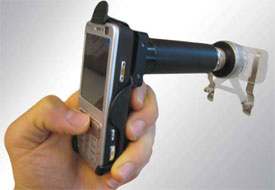
Many people are dissatisfied with the fuzzy quality of photos taken with their built-in cellphone cameras. So Microsoft will be rolling out this summer the most advanced built-in mobile phone-cam on the market, based on a fantastic prototype now in final user testing at Microsoft Research’s Beijing lab.

MegaNanoDubbed the “MegaNano,” the sylish but diminutive camera boasts 72 megapixel resolution and a shutter-speed setting range from 0.003 seconds all the way up to seven hours.

The itty-bitty MegaNano will be launched simultaneously with the new Microsoft Mobile Apps Store, bundled with a nice selection of jackets and outerware with specially reinforced pouch-pockets and backpacks designed to hold the tiny device. 

I know you’ll want one. One beta-tester says, “It’s so small yet so powerful!  I have to remind myself sometimes that the weight on my shoulders is actually a tiny camera!”

Continue reading

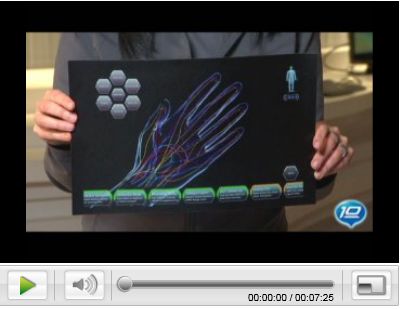
Year of Data brings together Apple iPhone, Microsoft Surface, Google Android


Neat video below (Stimulant’s “XRay” project), but first, why I think it’s neat:

Every year is the year of data, I believe.

Continue reading

Way Ahead and Far Behind

Today’s Washington Post has a story on its front page: “Staff Finds White House in the Technological Dark Ages.”

Two years after launching the most technologically savvy presidential campaign in history, Obama officials ran smack into the constraints of the federal bureaucracy yesterday, encountering a jumble of disconnected phone lines, old computer software, and security regulations forbidding outside e-mail accounts.”

“What does that mean in 21st-century terms? No Facebook to communicate with supporters. No outside e-mail log-ins. No instant messaging. Hard adjustments for a staff that helped sweep Obama to power through, among other things, relentless online social networking.”  -Washington Post

Some say that whoever has been responsible for information technology in the White House itself should be fired — but then perhaps the change of Administration just took care of that  🙂 

Overall, this situation is familiar to anyone who has worked in what I call “Big-G  IT” or the information technology of a federal government agency. I’ve argued about its challenges and sub-optimality before: see my previous pieces on “Roadmap for Innovation: From the Center to the Edge,” and more specifically “Puncturing Circles of Bureaucracy.”  In that latter piece back in March of 2008, I wrote about the “the defensive perimeters of overwhelming bureaucratic torpor,” and the frustrating reality within much of Big Government: “Federal employees have an entire complex of bizarrely-incented practices and career motivations, which make progress on technology innovation very difficult, not to mention general business-practice transformation as a whole.”

Here’s the truly frustrating, mind-bending part: it isn’t always true!  Other elements of the White House have cutting-edge, world-class technologies operating day in, day out.

Continue reading

A Semantic-Touch-Flexible-Cloud Future Prototype

One of the more popular posts I wrote in 2008 about Microsoft Research prototypes featured the “Research Desktop” project, bringing together semantic analysis with Web 2.0-style user interfaces. MSR is now supplementing those concepts with more natural interfaces and new display and touch technologies.

ces-future-prototypes

Tonight at the Las Vegas 2009 Consumer Electronics Show, Janet Galore of Microsoft’s Strategic Prototyping unit was onstage with Steve Ballmer, showing a conceptual demo of several technologies of the future which could significantly change the way people find, share and use information. Take a look at the video, which shows among other things new touch capabilities, semantic analysis, “Software + Services” integration of device computation with cloud computing, and flexible active displays.

By the way, that last one – flexible displays – was just highlighted by Bob Gourley in his New Year’s “Look Ahead: Some Technology Developments to Expect in 2009.”  I think this video’s example, about six and a half minutes ino the scene, really makes clear the startling promise of new displays.

Email this post to a friend

AddThis Social Bookmark Button