Google App Engine and the Gathering of Clouds

How many Cloud Computing platforms would you say there are today? 

Some abhor the notion of there being multiple clouds – by this thinking there is only one “cloud” in an almost Zen manner, meaning “the grid” and the ability to reach in, somewhere somehow, and use someone else’s compute capacity, web apps, services, storage, etc.  Some others, however, as Amazon and others roll out their branded ability to do that reach, are beginning to call these “clouds” — I prefer to think about them as distinct platforms enabling cloud computing, but that’s starting to become a hazy definition. 

Next week the world will hear more about Microsoft’s Mesh strategy.

I feel like an observer out on a prairie on a hot summer afternoon, watching the sky as cumulo-nimbus shapes emerge and burgeon across the horizon.  The multiplicity is going to inevitably lead to feature differentiation, competitive marketing, a full hype cycle with naysayers and boosters (see Fortune magazine), down-market competition, shoddy wannabe clouds, boom and bust, market shake-out, etc. etc. – good times! 

How many such platforms (how many clouds) will there be in future?  How many should there be?  And if multiplication really occurs, is this any different from “utility computing” and aren’t we heading back to the days of the mainframe-model of time-sharing?

Continue reading

Air Wars: the Air Force Takes Heat for its PR

FACT: A heated online debate is erupting about a particular photo posted online, and the brouhaha around it focuses on whether or not classified details are contained therein, thus revealing them. 

ANALYSIS: Given that others are even now writing extensively about this photo and its controversy I thought I would add a couple of thoughts.  Don’t bother blaming me for linking to the photo, by the way; given the attention and reposting/rehosting it has already received, the glare of publicity can only serve to prod better security practices. 

I expect to see parody versions on Flickr soon, with “Area 51” touches.

And so to my related thoughts: recently, an active-duty USAF officer and regular reader emailed me about one of my posts concerning Rod Beckstrom and the new National Cyber Security Center, which he had not previously heard of.  He wrote that in discussing it with a colleague, the response was “I thought the Air Force Cyber Command already had the mission to coordinate all cyber security efforts.”

Continue reading

Intriguing Politics – Social Media Discussion

FACT:  The second International Conference on Weblogs and Social Media (ICWSM) wrapped up yesterday in Seattle. It was organized again by the Association for the Advancement of Artificial Intelligence (or AAAI), with co-sponsorship by Microsoft, Google, and several universities and Web 2.0 companies. The papers are already being posted online here, which is great as there were some very interesting topics explored. 

ANALYSIS:   One really thought-provoking theme was proposed by Matthew Hurst, a scientist at Microsoft’s Live Labs (and co-creator of BlogPulse), who was a participant on the “Politics and Social Media” panel.  He’s summarized his points on his own blog, but it’s definitely worth pointing out the key distinction he posed:

Firstly, politics is about scaling social organization. A premier can’t talk to every citizen, so s/he has lieutenant’s. They have their own underlings, and so on in a typical hierarchical/departmental structure. Social media, however, is all about individuals – we read entries in weblogs, etc. So, if a politician wants to connect via social media, isn’t there some sort of fundamental mismatch? Obama may have 20, 000 followers on Twitter, but how many comments has he left on blog posts?

Secondly, there is the issue of social media amplifying the polarization (or homophily) found in any topical community. Thus, individuals look around at their neighbours in the social graph and see much of what they themselves are made of.

This bottom-down, top-up dichotomy has been discussed more generally about social media and social networks (often drawing a sharp distinction between “old-media” and “new-media,” or more colloquially if imprecisely as between “the media” and “the web.”)

Continue reading

Google’s Argument to Enterprise IT: “Trust Us”

FACT:  Yesterday, Google’s Dave Girouard, VP of enterprise sales, gave a keynote speech on “The Evolution of Cloud Computing” at FOSE, a Washington trade-show focusing on federal government and military IT customers.  According to a Washington Post reporter’s blog account afterwards:

[Girouard said] “Google will have to do things differently” to work with defense and intelligence agencies, where data security and privacy are held to the tightest standards. But he argued that having information spread across hundreds of different servers is actually more secure than housing data on a few servers at a specific location. “Security is now more virtual than physical,” he said.

ANALYSIS:  The Google salesman (Girouard is VP of enterprise sales) was speaking at FOSE on the same day I made an April Fools blogpost featuring a lame “Cloud Computing” joke (see it here, come back when you stop laughing).  

This year I’m at FOSE as neither buyer nor speaker; the past couple of years I spoke at FOSE, as a DIA official, and I always enjoy walking the exhibit floor, plus I was curious about Girouard’s take on Google’s current move into the federal space.

To be honest I’ve met him before when he was with Virage and he’s a fine fellow, a good salesman.

The rhetoric of his main pitch, though, seems to be battling uphill, and I’m not sure he gets a nuanced distinction.

Continue reading

Microsoft Research Reclaims Value of Pi

pi-techFACT: Educators in the state of Alabama are chafing as the state celebrates a dubious anniversary: today marks ten years since the Alabama state legislature voted to change the value of the mathematical constant pi from 3.14159… to the “Biblical value” of 3.0.  Ramifications were felt across the state. 

Now, a team of Microsoft Research computer scientists have announced success in a groundbreaking effort to refactor the Biblical value, using modern high-performance computing hardware and machine-translation technologies on the original Old Testament texts.
  
ANALYSIS:  Looking back, an April 1998 issue of Science and Reason newsletter written by physicist Mark Boslough recounts the political and cultural battles which went behind the Alabama legislative change. The legislature of the “Yellowhammer State” justified the change by citing biblical injunction. As one supporter put it: “the Bible very clearly says in I Kings 7:23 that the altar font of Solomon’s Temple was ten cubits across and thirty cubits in diameter, and that it was round in compass.”

The use of “3.0” as the value of pi led to problems in schools, businesses, and local scientific pursuits, including a group of frustrated engineers at the NASA research facility in Huntsville.  According to NASA/Huntsville’s director of special projects “Dr.” Jim Simon (doctorate pending), “We had strayed from using our Microsoft software and instead had been trying to figure out how to use an advanced Google search platform, which was sold to us as a powerful Cloud Computing system.”

Unfortunately, that effort proved frustrating for the “rocket scientists” any time they used calculations involving pi, based on the Alabama-standard value of 3.0, mostly because they were under the mistaken impression that they were contractually barred from using Cloud Computing on any sunny days. Given the hospitable local weather that left them unable to use their computers for an average of 290 days each year.

Continue reading

Media Says, IBM is Good for Government. Ah, Strike That….

FACT:  Federal Times, which was first to break the story, is reporting this afternoon that “IBM has been indefinitely suspended from doing business with federal agencies, according to a General Services Administration Web site.”

ANALYSIS: People accuse me of being too cynical.

I admit, I am something of the opposite of the great line from This is Spinal Tap, when the David St. Hubbins character says, in the random interview clips at the end of the movie, “I believe virtually everything I read, … and I think that is what makes me more of a selective human, than someone who doesn’t believe anything.”

I do have trouble believing things I hear and read from most mainstream sources at first blush. 

Continue reading

Do Voters Love the Candidates… or their Fonts?

FACT:  John McCain, Hillary Clinton, and Barack Obama have chosen distinctively different typeface fonts for their campaign posters, bumper stickers, and TV-ad logos. 

font-gotham-obama.jpgObama uses sans serif Gotham.  McCain uses sans serif Optima. Only Clinton uses a serif, New Baskerville.  According to the Los Angeles Times yesterday, many typographers are following the usage choices closely, and now some political analysts are finding message in the medium; Obama’s choice is “the hot font of 2008,” Clinton’s font flourishes “conjure trustworthiness,” while McCain’s communicates an “old-fashioned yet quirky vibe.”
ANALYSIS:  Anyone who remembers their first experience with a personal computer’s word-processing program recalls that initial thrill when the realization hit: I can choose any font? I can choose any font!!!

Billions of funky emails, resumes, and yard-sale posters later, we’re all perhaps jaded by the profusion of font styles, and tend to have built up biases and defenses regarding certain looks.

Continue reading

The Future of Enterprise Computing – and Social Computing

I wrote the other day about how highly ranked the University of Virginia’s undergrad business school is (a close second in BusinessWeek’s annual ranking), and mentioned that one reason is the creative research and programs they sponsor.

In fact, thanks to UVA’s McIntire School of Commerce, I enjoyed a great day recently exploring some of my favorite topics with leading experts.  I was an invited speaker at their one-day conference on The Future of Enterprise Computing on March 14th, presented by McIntire’s Center for the Management of Information Technology (CMIT).  It was a fascinating day….

Continue reading

The IC’s Own Geek Superheroine

FACT: According to the law establishing the new position, the Director of National Intelligence is charged with “the recruitment and training of women, minorities, and individuals with diverse ethnic, cultural, and linguistic backgrounds,” as a way of broadening the personnel base on which the nation relies for intelligence analysis.

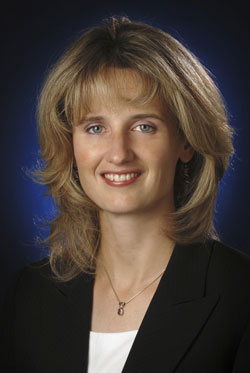
ANALYSIS: I’ve noticed that one of the single-most-viewed posts in this six-month-old blog has been my early profile of Dr. Lisa Porter, when she was appointed the first director of IARPA, the advanced-tech crowd for the intelligence community.

I can tell that the large volume of hits isn’t from my normal reader crowd, but comes in from search results. There was another uptick of hits on that old post this week, driven by searchers using Google and Live Search, and I believe it’s because WIRED magazine has its own profile of Porter in its new edition, the one with “Apple: Evil/Genius” on the cover.

The new profile, while short, doesn’t mind taking advantage of her apparently unexpected good looks; it begins, “Picture Q as a tall blonde woman with an American accent, and you’ve got Porter. Lisa Porter.”

Continue reading

Expect Some “New Thinking” on Cyber Security…

FACT: Department of Homeland Security head Michael Chertoff last week: “I am pleased to announce my appointment of Rod Beckstrom as the first Director of the National Cyber Security Center. Rod will serve the department by coordinating cyber security efforts and improving situational awareness and information sharing across the federal government.”

ANALYSIS: There are people who think inside the box, those who think outside the box, and those who ask: What box?

Then there are “the anti-box people.”  They see the box, shove it on its side, stomp on it to squeeze it flat, and consign it to recycling where it belongs.

One of those kind of people is Rod Beckstrom, a well-known Silicon Valley successful entrepreneur and author. I knew him at Stanford, aeons ago, and like others recognized his leadership drive when he ran successfully for student body president, and he left with both a BA and MBA on the way to forming his first successful software startup.

I was surprised when I read last week that Rod is moving to Washington to take a high-level government job.

Continue reading