Hiding new technology in plain sight

If I’m giving a private demo of an advanced technology or piece of software that Microsoft is cooking up, I often encounter the response, “Yeah, but we’ll probably never see this released, will we?”

Continue reading

Microsoft Sphere, Apple Tablet

Fact: Today is the first public showing of “Sphere,” Microsoft’s newest multi-touch innovation: “After months of rumors, Microsoft researchers are taking the wraps off a prototype that uses an internal projection and vision system to bring a spherical computer display to life. People can touch the surface with multiple fingers and hands to manipulate photos, play games, spin a virtual globe, or watch 360-degree videos.”

Analysis:  The video tells the story, particularly when you keep in mind that Sphere (and its earlier cousin Surface) represent a new multi-touch, multi-interface platform for human use of computing power.  A year ago Surface was still just emerging from the research lab, and now a year later it’s been introduced into AT&T retail stores and is on its way to many other commercial and public environments.  Sphere will be used in similarly unpredictable ways, adopted by third-party developers as an innovative canvas on which they can project cool new uses.

Continue reading

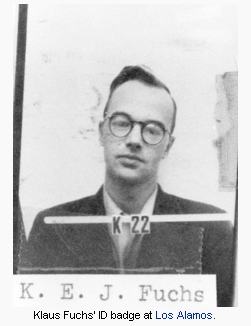
Theory of the Fireball, Supercomputing, and other Los Alamos Tidbits

Back in the early ’90s when I was first dating Kathryn, now the lovely bride, we went on some awesome roadtrips, including many cross-country – great way to get to know someone.  At the time my brother was an Air Force pilot, flying the F-117 stealth fighter, so we once paid him a visit at Holloman AFB on a 10-day drive through the Southwest.  I’ll have to find and upload to Flickr the pictures he took of each of us sitting in its classified cockpit – surely a massive security violation which I lay entirely at his feet (lucky for him he’s retired from the Air Force now and flying for Delta). 

Sadly, the F-117 Night Hawk has also now been officially retired, replaced by the F-22 Raptor.

As much as that was a thrill, though, the highlight of that particular roadtrip was driving up to the Los Alamos plateau and spending some time touring around the Lab, the Museum, and the interesting little town that’s grown up around all that PhD talent in the middle of the high desert.

That lab’s on my mind because I’ve been thinking about supercomputing and the revolution it could undergo thanks to quantum computing. I’m in Santa Barbara visiting the “Station Q” research program in quantum computing, and will write more about quantum computing soon, since I’m actually beginning to understand it.

But as an interesting artifact in my preparatory reading, Microsoft’s John Manferdelli sent me a link to a Federation of Atomic Scientists archive of declassified Los Alamos National Lab technical reports and publications, from “the good old days” at Los Alamos.

Continue reading

The “Rush to the Cloud” – Not So Fast…

Had a great time on Wednesday on a panel at the “Defense 2.0” conference, at the Arlington Ritz-Carlton.  I believe I learned as much from my fellow panelists from Cisco, IBM and so forth – about the importance of information security and assurance – as any conference in recent memory.  The story in Government Computer News (“Defense 2.0 a Work in Progress“) captures the views of most of the speakers. 

I had a gentle and gentlemanly disagreement with the keynote speaker, Mike Nelson.  Mike has a distinguished career, working with Internet-inventor Al Gore while he was VP, and later Director of Internet Technology and Strategy at IBM.  I offered that he was perhaps slightly overly enamored of the “rush to the Cloud” school of thinking.  I’ve written about that school of thought before, and the balance of where computing power is likely to reside in future, given Moore’s Law for the foreseeable future.  The GCN quotes capture my thinking in short form: there’ll be the cloud, along with increasingly powerful computing in local form factors (some desktops, more laptops, handhelds, mobiles, and embedded-computing forms of all sorts).

Continue reading

A-SpaceX, Google, and Virtual Tuesday

Yesterday I had a “virtual world vibe” going.  At 5:30 a.m. when my dog Jack woke me up offering to take me for a walk, the first thing I noticed on my mobile was a series of tweets from Chris Rasmussen, NGA’s social software guru, posted the night before.  Twitter is interesting for a lot of reasons, but one is the ability to snatch asynchronous stream-of-consciousness statements, from strangers and friends alike, as they pass by in the microblogosphere conversation.

Chris went on a tear about Second Life, with several hilarious observations and comments within the space of an hour, so here are several from his public Twitter feed:

Continue reading

Up Late? Innovate.

Here’s some quick thought-provoking advice from Phil McKinney, who runs HP’s Innovation Program Office.  (Phil has his own blog as well, but the advice comes from an interview yesterday in the San Jose Mercury News.)

Q. One of your tips for innovation is to stay up late, because that’s when your filters are down. (The mental filters that rule out wild ideas, which might turn out to be good ones.) Do you still do that?

A. “Oh yeah, it drives my wife crazy. The idea really is to go back to things you’d do before you were successful, before you learned that you’ve always got to be on your guard.”

Man, do I swear by that!  Phil has some other points that I’m less enamored with, mostly because I don’t believe he’s thinking very radically.  His point that in the future we might be data-mining healthcare histories is undercut by the fact that we’re already doing it, as I blogged yesterday

Another less-than-startling prediction: We’ll still be using Second-Life style virtual worlds two decades from now?  Please!  I suppose we’ll also still be changing toner cartridges!!

Check out Phil’s blog, it reflects his innovative thinking better 🙂   But don’t read it till after midnight…

 
Email this post to a friend

AddThis Social Bookmark Button

Sales Guy vs Web Dude

The website where I first saw this video wrote, “This would be funny if it weren’t so true.”  No – it’s funny because it’s so true!  Yes, even in government IT settings.

The video’s here; adolescent language warning, a la South Park. If you don’t get the jokes, just reboot your system. 3 times.

Email this post to a friend

AddThis Social Bookmark Button

Innovation in Robotics: Government Uses?

Fact: Last week’s Automatica 2008, the big international robotics and automation trade-show, had “over 30,000 trade visitors from around 90 countries,” visiting 900 exhibitors’ booths, according to the conference wrap-up

Analysis: When I spoke recently at an IARPA conference in Orlando, and was asked to give a glimpse into Microsoft’s vision of R&D trends, one of the possibly surprising areas I highlighted was robotics.  We’re making a major push in that area, for reasons that might not be intuitive based on an old-fashioned impression of what Microsoft offers in the government realm.  More on the intelligence community’s potential use below.

Continue reading

“The Largest Social Network Ever Analyzed”

FACT: According to ComScore data cited in a story in Monday’s FInancial Times, “Facebook, the fast-growing social network, has taken a significant lead over MySpace in visitor numbers for the first time… Facebook attracted more than 123 million unique visitors in May, an increase of 162 per cent over the same period last year… That compared with 114.6 million unique visitors at MySpace, Facebook’s leading rival, whose traffic grew just 5 per cent during the same period… The findings mark the first time that Facebook, launched in 2004, has taken a significant lead in unique visitors, [and] come at a time of change inside Facebook, as the one-time upstart attempts to transform itself into a leading media company.

ANALYSIS:  This week several members of the Microsoft Institute met in Redmond with a visiting friend from government, and among other talks we had a very interesting discussion with Eric Horvitz, a Microsoft Research principal researcher and manager.  Eric’s well known for his work in artificial intelligence and currently serves as president of the Association for the Advancement of Artificial Intelligence (AAAI).

We talked about one of Eric’s recent projects for quite a while: “Planetary-Scale Views on a Large Instant-Messaging Network,” a project which has been described by his co-author as “the largest social network ever analyzed.” 

Continue reading

Data Centers and Aircraft Carriers (and Google)

FACT: Information Week has a solid story today, “Inside Microsoft’s $550 Million Mega Data Centers,” with a tour of the new San Antonio data center under construction.  It’s of the “Quincy-class” (our term in homage to Navy lingo, meaning big, but not the biggest of aircraft carriers; that would be the Chicago-class data center, see below).  The reporter writes: “By September, it’ll be the newest star in Microsoft’s rapidly expanding collection of massive data centers, powering Microsoft’s forays into cloud computing like Live Mesh and Exchange Online, among plenty of other as-yet-unannounced services.” 

ANALYSIS: I get asked about “the new way to build data centers” more often than any other question but one by government technology professionals.  The most popular question, and it’s related, is about cloud computing.  They both came up today during a meeting with one of the National Labs.

Continue reading