Some say Obama has already chosen Cyber Czar

I’ll wade into the breach again, of analyzing (and trying to anticipate) some national-security appointments for the new Obama Administration.  Today I must admit that I’m taken with the latest reportage from the U.K. Spectator – a quite conservative publication not usually known for its closeness to the Obama inner circle.

Continue reading

My bold decision to withdraw from consideration as Obama’s CTO

To: President-Elect Barack Obama

From: Lewis Shepherd

RE: My Imminent Selection as Chief Technology Officer for the United States

Mr. President-Elect, I am hereby reluctantly but insistently withdrawing my name from consideration as your appointment to the newly created position of Chief Technology Officer for our nation.

No, no, please don’t try to persuade me otherwise. My decision is final.

Analysis: My earlier post about John Brennan being President-elect Obama’s “imminent” selection as CIA director is now a curio, given Brennan’s decision yesterday to withdraw from consideration. 

Like any good intelligence analyst writing a balanced assessment, I had included the caveat that the only thing standing between Brennan and the appointment was the likelihood of a last-minute political squabble or contretemps.

This being Washington we’re talking about, that is precisely what happened. 

Continue reading

John Brennan’s Approach as the New CIA Director

Barring unforeseen Washington politicking at the last minute, John Brennan is being announced later today as President-elect Obama’s choice to replace Mike Hayden as Director of the Central Intelligence Agency.

Continue reading

When Intelligence Officers Get Social…

Today (and on-and-off this week) I’m attending the Intelligence Community’s “Enterprise 2.0: WIRE and ICES Conference,” up at the Kossiakoff Center at JHU/APL in Maryland, with its focus this year on social software and social networking – not the same thing, of course.

Acronym explanation, with some new ones tossed in:

  • WIRE = CIA’s World Intelligence Review, a very nifty Web 2.0-style classified news site now available on JWICS and SIPRNET.
  • ICES = Intelligence Community’s Enterprise Services group. 
  • And of course, JHU/APL = Johns Hopkins University’s Applied Physics Lab.

Continue reading

Three Key Promotions in U.S. Intelligence

In the old days of Kremlinology, our side’s “Soviet analysts” (I was one as a kid, back in 1985-86) would pore over personnel lists and announcements of Politburo or Central Committee appointments, seeking clues to the direction of Party doctrine and intent. Military personnel promotions and reassignments were also studied closely to divine any insight into Soviet military policy.

There’s not a direct analogy to American military leadership promotions, but those lists are also studied intently, by peers and colleagues within the military branches, and also by experts throughout defense industry circles who can often decode Pentagon politics by watching who gets an extra star and who gets passed over.

Friday the U.S. Senate confirmed several key Army promotions, including three which I consider to be the most critical military intelligence positions in the nation. 

Continue reading

Research and Intelligence … Research for Intelligence

I’ll be at Penn State University for the next couple of days, at the Research in American conference.  This particular conference, with the theme “Connecting Technology Thought Leaders with Government Officials,” is sponsored by the Office of the Director of National Intelligence, focusing on their Science and Technology area. 

Here’s the agenda for the conference, which has an excellent lineup of technologists presenting their approaches and progress. 

ODNI turned to the Intelligence and National Security Alliance (INSA) to host and run the conference.  Someone, somewhere in the chain, slipped up and invited me as the Keynote speaker for Tuesday – I’m planning to do the thing with no slides and to speak (in part) about the emerging possibilities of revolutionary research in a post Web 2.0 world.

For some sobering background information,  check out a recent tour of the research-funding horizon by Amy Ellis Nutt in the New Jersey Star-Ledger (“As research funds stagnate, science in state of crisis“).  Here’s a taste:

Once the world’s gold standard, American scientific enterprise is in free fall. Short of government funds and strapped for cash, researchers across the country are abandoning promising avenues of scientific investigation and, increasingly, the profession of science itself.” – Amy Ellis Nutt, The Star-Ledger

Do you share that pessimism?  Think it’s overstated?

I’ll give an update about the conference tomorrow.

Email this post to a friend

AddThis Social Bookmark Button

Business Executives for National Security, and Dana Carvey?

Went to the big BENS gala last night (Business Executives for National Security) in downtown Washington, along with some Microsoft colleagues – the company was a sponsor – and several guests who fit right in with the rest of the crowd, military brass and IC muckety-mucks.  I first met BENS founder Stanley Weiss back in the late 1980s when he came to Silicon Valley to recruit support for the new group, “a nonpartisan business organization aiming to cut through ideological debates on national security issues.” 

The evening’s billed highlight was the awarding of the annual BENS Eisenhower Award to Sec. of Defense Robert Gates, who gave just a phenomenal speech (see Reuters and AP coverage today, and the full text here). I blogged a couple of days ago about his speech to the Heritage Foundation, which I read the text of, but seeing Gates deliver this speech really impressed me, to be honest. He comes across as sincerely dedicated to fixing some of the fundamental problems of DoD and the intelligence community (his career after all was at CIA and he is obviously a thoughtful critic of the DNI structure and “reforms”).  I sat there wondering whether Gates would be willing to continue at the Pentagon in the next Administration (odds are much higher of that with a McCain victory, obviously, and infinitesimal otherwise).

Brent Scowcroft introduced Gates with a warm and witty tribute, and it was nice to see him in person.  He told several jokes making fun of the Beltway culture, getting big laughs. Gates continued in kind at the beginning of his remarks, before he got serious – keep reading for one of Gates’s best jokes:

Continue reading

IARPA and the Virtual Long Tail

FACT: This week, the Intelligence Advanced Research Projects Activity, an arm of the Director of National Intelligence (DNI), launched its new unclassified website.  What’s there is initially fairly minimal, but they’ll be adding to the public information posted there regularly.

ANALYSIS:  I spent the week in Orlando, as a Keynote speaker at the IARPA “Incisive Analysis Conference.”  I’ll be writing a little more about the conference in the near future, as I saw some great demo’s and spoke to the principal investigators on many excellent and far-sighted advanced research projects sponsored by IARPA.  It was great to be there and to see so many old friends from the intelligence community, the national labs (PNNL, Sandia, Oak Ridge, Livermore), DoD, and innovative commercial R&D outfits.  Also, as the first IARPA conference since the organization’s launch, it was an opportunity to hear new director Lisa Porter communicate her vision and principles, which she did well and I’ll discuss those soon as well.  (She also kidded me about my efforts to make her a cultural phenomenon, but I blamed it on WIRED magazine.)

Continue reading

The Future of Enterprise Computing – and Social Computing

I wrote the other day about how highly ranked the University of Virginia’s undergrad business school is (a close second in BusinessWeek’s annual ranking), and mentioned that one reason is the creative research and programs they sponsor.

In fact, thanks to UVA’s McIntire School of Commerce, I enjoyed a great day recently exploring some of my favorite topics with leading experts.  I was an invited speaker at their one-day conference on The Future of Enterprise Computing on March 14th, presented by McIntire’s Center for the Management of Information Technology (CMIT).  It was a fascinating day….

Continue reading

The IC’s Own Geek Superheroine

FACT: According to the law establishing the new position, the Director of National Intelligence is charged with “the recruitment and training of women, minorities, and individuals with diverse ethnic, cultural, and linguistic backgrounds,” as a way of broadening the personnel base on which the nation relies for intelligence analysis.

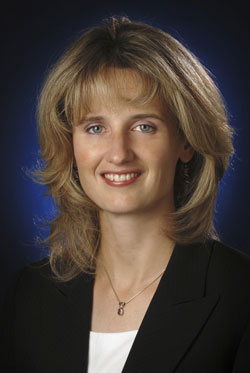
ANALYSIS: I’ve noticed that one of the single-most-viewed posts in this six-month-old blog has been my early profile of Dr. Lisa Porter, when she was appointed the first director of IARPA, the advanced-tech crowd for the intelligence community.

I can tell that the large volume of hits isn’t from my normal reader crowd, but comes in from search results. There was another uptick of hits on that old post this week, driven by searchers using Google and Live Search, and I believe it’s because WIRED magazine has its own profile of Porter in its new edition, the one with “Apple: Evil/Genius” on the cover.

The new profile, while short, doesn’t mind taking advantage of her apparently unexpected good looks; it begins, “Picture Q as a tall blonde woman with an American accent, and you’ve got Porter. Lisa Porter.”

Continue reading