Three cool new projects in Microsoft Research

[April Fool’s Edition]   I haven’t blogged in a little while – been a little busy – so I’ll make up for it with a burst of three cool new things coming out of the inventive lab work at Microsoft Research – improving Twitter, computer performance, and mobile phones.

MegaNano: New High-End Camera for Cellphones

Many people are dissatisfied with the fuzzy quality of photos taken with their built-in cellphone cameras. So Microsoft will be rolling out this summer the most advanced built-in mobile phone-cam on the market, based on a fantastic prototype now in final user testing at Microsoft Research’s Beijing lab.
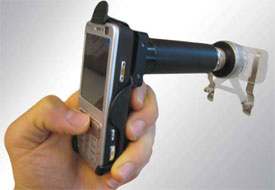
MegaNanoDubbed the “MegaNano,” the sylish but diminutive camera boasts 72 megapixel resolution and a shutter-speed setting range from 0.003 seconds all the way up to seven hours.

The itty-bitty MegaNano will be launched simultaneously with the new Microsoft Mobile Apps Store, bundled with a nice selection of jackets and outerware with specially reinforced pouch-pockets and backpacks designed to hold the tiny device. 

I know you’ll want one. One beta-tester says, “It’s so small yet so powerful!  I have to remind myself sometimes that the weight on my shoulders is actually a tiny camera!”

Continue reading

A Semantic-Touch-Flexible-Cloud Future Prototype

One of the more popular posts I wrote in 2008 about Microsoft Research prototypes featured the “Research Desktop” project, bringing together semantic analysis with Web 2.0-style user interfaces. MSR is now supplementing those concepts with more natural interfaces and new display and touch technologies.

ces-future-prototypes

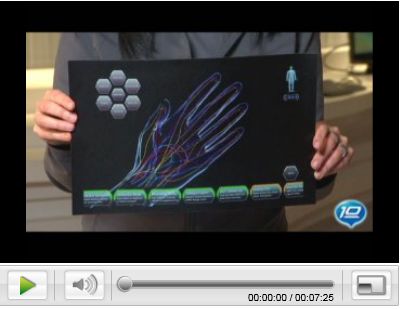
Tonight at the Las Vegas 2009 Consumer Electronics Show, Janet Galore of Microsoft’s Strategic Prototyping unit was onstage with Steve Ballmer, showing a conceptual demo of several technologies of the future which could significantly change the way people find, share and use information. Take a look at the video, which shows among other things new touch capabilities, semantic analysis, “Software + Services” integration of device computation with cloud computing, and flexible active displays.

By the way, that last one – flexible displays – was just highlighted by Bob Gourley in his New Year’s “Look Ahead: Some Technology Developments to Expect in 2009.”  I think this video’s example, about six and a half minutes ino the scene, really makes clear the startling promise of new displays.

Email this post to a friend

AddThis Social Bookmark Button

Stretching collaboration with Embodied Social Proxies

My wife and I are spending Christmas this year at home in Montross, and I’m sad that we’re not visiting with family in North Carolina or California.  But I’ve been looking at some new Microsoft research efforts on how to keep in touch with people in more natural ways, particularly valuable for teams working across geographic distances, which is how our Microsoft Institute works.

The question of how distributed teams can work collaboratively is only going to get more challenging, with out-sourcing and crowd-sourcing. Last week the Institute had a great visitor to our Reston digs: Tony Hey, Microsoft’s Corporate Vice President of External Research.  Tony’s bio on Wikipedia mentions his thirty years as a leading European academic (particle physics was his game), along with the excellent books he’s authored: Einstein’s Mirror, and Feynman and Computation.

Continue reading

Several new Microsoft advanced technologies

Fact: As reported in TechCrunch and other sites today, “Microsoft’s Live Labs has just released Thumbtack, a web clipping service that allows users to compile links, media, and text snippets into online storage bins for future reference. Users can also share their Thumbtack collections with their peers, allowing them to collaborate by adding new clips and notations… The service works fine on IE7 and Firefox, and isn’t OS dependent. Each of these clippings can be sorted into folders called ‘Collections’, which can be published to the web via RSS, embedded in blogs, opened to friends for collaboration, or kept private for safe keeping.”  [There’s also a good Ars Technica review of Thumbtack here.]

Continue reading

My other computer is a Cray

Fact: The annual ACM Gordon Bell Prize is about to be awarded at “SuperComputing 08” (or SC08) which takes place November 15-21 at the Austin Convention Center in Texas. The convention is “the” international conference for high-performance computing, networking, storage, and analysis. The Association for Computing Machinery makes the Bell award “to recognize outstanding achievement in high-performance computing,” in honor of Microsoft’s legendary Gordon Bell, one of the pioneers of supercomputing.

Continue reading

Inventing the Software that Invents the Future

Worried about today’s stock market activity? Retreat with me into the security of the bright future that awaits.

Microsoft’s Craig Mundie (pater familias of the Institute for Advanced Technology in Governments), is on a college tour across the nation.  The trip is something of a reprise of jaunts Bill Gates famously made over the years, when he would string together visits to campuses partly to evangelize, partly to recruit, and mostly to get new ideas from bright young (and contrarian) minds.  The Seattle paper today labels these tours as filling the role of Microsoft’s “chief inspiration officer” (“Mundie gives campuses peek at tech’s future”).

Continue reading

Crisis? Pshaw. Be Bold with Research Investments

Bottom line: The smart companies will weather this fiscal crisis by “steering into the skid,” and actually increasing their investment in the future.

One of my last pieces of advice to DIA’s director before leaving last year was to increase the amount of money annually invested in IT research and innovation. DIA’s technology budget was typically too bloated on the side of operations and maintenance for current systems, and not investing enough in the future, though during my time there we had made significant progress in redressing that, increasing the resources (people and money) put against “what comes next.”

In government-agencies particularly (and many torpid commercial enterprises also), budgeteers make the mistake of throwing money at legacy systems instead of being bold and prioritizing research for the next generation of systems. (Last year I wrote about these issues in “Moving Money to the Left.”)

Now, no one has asked me about my views on the fiscal “bailout package,” which makes sense, particularly when there are people who make far more sense than me expressing their well-founded opinions in ways I thoroughly agree with – such as, say, Harvard economist Jeffrey Miron in his excellent op-ed piece for CNN last night (“Bankruptcy not Bailout is the Answer“).

But a number of people have asked me what the impact on Microsoft might be from the current “crisis” and market volatility.  I have to say that I’m pretty optimistic, precisely because Microsoft is investing in the future, in ways that are designed to carry us through short-term downtimes and on to exciting new platforms.  The company’s cash-rich, which helps. 

 Most importantly, our CEO Steve Ballmer firmly pointed to our increasing bet on our new approaches to the future.  Speaking in Silicon Valley, he said proudly that not only will Microsoft continue to buy about 20 innovative companies a year, but we will also keep spending $9 billion a year, or 14 percent of revenues, on internal research and development. (See the Venture Beat story here.) 


Microsoft “will use the slump as a chance to invest more in our future than the other guys we’re competing with” – Steve Ballmer, quoted in Bloomberg.com  


There are going to be winners and losers coming out of this slump, as there have been in each of the tech slumps I’ve seen in my short (!) life over the past three decades I’ve been involved.  The winners are inevitably those with a vision for the long term and the determination to plan beyond the horizon. 

Microsoft won’t be the only winner (see “Microsoft, Xerox Invest in Innovation” for a description of the Xerox CTO’s similar thoughts), but I’m convinced we will be in the front rank.


Email this post to a friend

AddThis Social Bookmark Button

A New Prototype: Research Desktop

Fact: The international conference on Advances in Social Network Analysis and Mining (ASONAM 2009, next July in Athens, Greece) today issued its call for papers on “experimental and theoretical works on social network analysis and mining,” particularly relating to online social Web sites, email logs, phone logs and instant messaging systems “which are widely analyzed using graph theory and machine learning techniques.”  Interested authors are encouraged to submit abstracts of up to 300 words by December 10, 2008; the full papers aren’t due until January 31, 2009.  More info at www.asonam.org.

Analysis: Several Microsoft Research people are preparing papers based on their current research, and I’m considering attending myself (I’ve written before about MSR’s work in analyzing large social networks). There are three Microsoft scientists on the Committee (Dou Shen, Haizheng Zhang, and Rina Panigrahy – check out Rina’s publications on hashing and sketching algorithms).  It should be a top-notch conference, co-hosted by ACM and IEEE.

But that’s way off in the future – what if you want to look at some research stuff right now? Well, I’ve been going through the related “Socio-Digital Systems” work of MSR Cambridge (UK), and they’ve just added more information to their section here of the main MSR site.  That’s some neat stuff, more on the side of the actual social uses of digital data and the effects on our (still-human?) everyday lives.

Continue reading

Google, Microsoft, and Medical Research

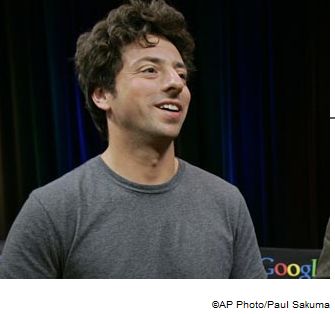
Fact: Two stark numbers are published today about Google co-founder Sergey Brin. First, the annual update of the “Forbes 400” wealthiest billionaires reports that Brin’s personal net worth is $15.9 billion (though that’s down some $2.7 billion from last year, due to the decline of Google’s stock price by 40% since last November).  More importantly, Brin himself wrote in his personal blog today that by having genetic research done on himself, “I learned something very important to me — I carry the G2019S mutation… it is clear that I have a markedly higher chance of developing Parkinson’s in my lifetime than the average person. In fact, it is somewhere between 20% to 80% depending on the study and how you measure.”

Analysis: Sergey Brin’s own blog account of his discovery is a remarkably personal and touching piece, dealing with his mother and her own belated diagnosis of Parkinson’s, and the scientific boundaries of current genetic research and the implications one can draw from this immature field of science.

(c) AP Photo, Paul Sakuma

This was only the second post on Sergey’s new blog; the blog’s name is “Too” – and the first post merely stated the rationale for that name (“Welcome to my personal blog. While Google is a play on googol, too is a play on the much smaller number – two. It also means ‘in addition,’ as this blog reflects my life outside of work”). 

If his refreshing honesty and thoughtfulness today are going to be the calibre of his writing, I’m going to be a regular reader. 

His piece reminds me of Steve Jobs’ modern classic, his 2005 Stanford Commencement Address.  If you’ve never read that, then stop reading my words right now, and go read that. You’ll find yourself over the weekend thinking about your own approach to life.

But back to Brin and genetic research.  It will be interesting to watch what Google’s research arm is able to do in the area of medical and health research.  To make progress in bioengineering and genetics, “organizing the world’s information” is absolutely paramount and of course that’s Google’s mission statement.

Continue reading

Hiding new technology in plain sight

If I’m giving a private demo of an advanced technology or piece of software that Microsoft is cooking up, I often encounter the response, “Yeah, but we’ll probably never see this released, will we?”

Continue reading