A New Prototype: Research Desktop

Fact: The international conference on Advances in Social Network Analysis and Mining (ASONAM 2009, next July in Athens, Greece) today issued its call for papers on “experimental and theoretical works on social network analysis and mining,” particularly relating to online social Web sites, email logs, phone logs and instant messaging systems “which are widely analyzed using graph theory and machine learning techniques.”  Interested authors are encouraged to submit abstracts of up to 300 words by December 10, 2008; the full papers aren’t due until January 31, 2009.  More info at www.asonam.org.

Analysis: Several Microsoft Research people are preparing papers based on their current research, and I’m considering attending myself (I’ve written before about MSR’s work in analyzing large social networks). There are three Microsoft scientists on the Committee (Dou Shen, Haizheng Zhang, and Rina Panigrahy – check out Rina’s publications on hashing and sketching algorithms).  It should be a top-notch conference, co-hosted by ACM and IEEE.

But that’s way off in the future – what if you want to look at some research stuff right now? Well, I’ve been going through the related “Socio-Digital Systems” work of MSR Cambridge (UK), and they’ve just added more information to their section here of the main MSR site.  That’s some neat stuff, more on the side of the actual social uses of digital data and the effects on our (still-human?) everyday lives.

Continue reading

Follow NASA Innovation on Twitter

Yesterday my group hosted a meeting at Microsoft Reston with the ILO Institute on “Innovation in Large Organizations.”  The ILO Institute always brings together great clients (FedEx, Time Warner, SAIC, IBM, US Postal Service) and yesterday was no exception, with an eclectic group from NIH, DoJ, NASA, RTI, GTSI and others. The discussion about that seeming oxymoron – innovation in large organizations – was fascinating, with lively threads about distinctions between Microsoft and Apple for example, and whether the latter is actually a technology company or a fashion company.  [My opinion: its success comes from its fashion/marketing leadership, not technical advances.]

Continue reading

Google, Microsoft, and Medical Research

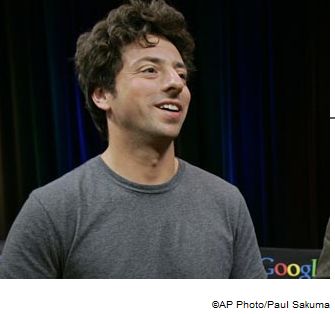
Fact: Two stark numbers are published today about Google co-founder Sergey Brin. First, the annual update of the “Forbes 400” wealthiest billionaires reports that Brin’s personal net worth is $15.9 billion (though that’s down some $2.7 billion from last year, due to the decline of Google’s stock price by 40% since last November).  More importantly, Brin himself wrote in his personal blog today that by having genetic research done on himself, “I learned something very important to me — I carry the G2019S mutation… it is clear that I have a markedly higher chance of developing Parkinson’s in my lifetime than the average person. In fact, it is somewhere between 20% to 80% depending on the study and how you measure.”

Analysis: Sergey Brin’s own blog account of his discovery is a remarkably personal and touching piece, dealing with his mother and her own belated diagnosis of Parkinson’s, and the scientific boundaries of current genetic research and the implications one can draw from this immature field of science.

(c) AP Photo, Paul Sakuma

This was only the second post on Sergey’s new blog; the blog’s name is “Too” – and the first post merely stated the rationale for that name (“Welcome to my personal blog. While Google is a play on googol, too is a play on the much smaller number – two. It also means ‘in addition,’ as this blog reflects my life outside of work”). 

If his refreshing honesty and thoughtfulness today are going to be the calibre of his writing, I’m going to be a regular reader. 

His piece reminds me of Steve Jobs’ modern classic, his 2005 Stanford Commencement Address.  If you’ve never read that, then stop reading my words right now, and go read that. You’ll find yourself over the weekend thinking about your own approach to life.

But back to Brin and genetic research.  It will be interesting to watch what Google’s research arm is able to do in the area of medical and health research.  To make progress in bioengineering and genetics, “organizing the world’s information” is absolutely paramount and of course that’s Google’s mission statement.

Continue reading

Twitter Says LHC Fires Up, Earth Stubbornly Refuses to End

Fact: This morning’s press release from CERN: “Geneva, 10 September 2008. The first beam in the Large Hadron Collider at CERN was successfully steered around the full 27 kilometres of the world’s most powerful particle accelerator at 10h28 this morning. This historic event marks a key moment in the transition from over two decades of preparation to a new era of scientific discovery.” (LHC background here.)

Analysis: Early this morning, Twitter alerted me that the Earth was still spinning. Below I explain how.

Continue reading

Hiding new technology in plain sight

If I’m giving a private demo of an advanced technology or piece of software that Microsoft is cooking up, I often encounter the response, “Yeah, but we’ll probably never see this released, will we?”

Continue reading

Institute for Advanced Technology in Governments

Channel 10 podcast

Channel 10 podcast

I’m a big fan of the cool site Channel 10 and its podcasts and blogs (“a place for enthusiasts with a passion for technology. Through a world-wide network of contributors, Channel 10 covers the latest news in music, mobility, photography, videography, gaming, and new PC hardware and software”).

So I was chuffed when the ubiquitous Jon Udell interviewed me a week ago for Channel 10 (“Lewis Shepherd discusses the Institute for Advanced Technology in Governments“).

Continue reading

Armed Autonomy: Mechatronics plus Software plus Ammo

The Killer Robots are Coming!

Fact: According to a new story in LiveScience (“Will the U.S. Have a Droid Army“), “autonomous robots with the ability to open fire upon their own initiative are under development in other countries.”  Robotics researchers Doug Few and Bill Smart at Washington University in St. Louis are quoted with the assessment that “the U.S. military may be 30 percent robotic by the year 2020.” 

Analysis: I’ve been having some interesting discussions with DoD and their contractors about robotics lately, and the question of autonomous behavior comes up frequently, though infrequently about armed systems.  Among other reasons, Army’s Future Combat Systems (FCS) places great store in unarmed robotic systems coordinating with other command and control or combat systems. Continue reading

Gartner sees Hype Cycle for Social Software

Fact: Gartner now says that “Web 2.0 software” is falling from its “Peak of Inflated Expectations” and is on its way to a “Trough of Disillusionment.”  However, Gartner finds that wiki software has traversed that path already and is now well on its way up again to mature enterprise acceptance as a valuable productivity tool.

Analysis: Gartner’s just released their 2008 “Hype Cycle” report on Social Software – you know, stuff like public virtual worlds and Web 2.0 tools.

(I don’t know the legality of republishing the actual chart itself, so I’m not including it; I use the Microsoft enteprise license to access Gartner research.  I do note that a Web 2.0 enthusiast from the Netherlands has already posted the new Hype Cycle chart another new and related Hype Cycle chart, on “emerging technologies,” as a Flickr image here. There’s great overlap between the two reports.)

I’ve written before about the usefulness of Gartner analyses; I have to admit that Hype Cycles are my favorites. There’s something about internally debating their judgment calls as your eye travels the path, from pre-adoption “Technology Triggers,” through the bubble-esque “Peak of Inflated Expectations,” and right down into the depths of the “Trough of Disillusionment.” 

If you’re an enterprise IT guy, in a CIO or CTO role or investigating/recommending/approving new technology investments, you really wind up focusing most time on the slow ascending climb to the right of the chart, what Gartner calls the “Slope of Enlightenment.”  Just as in the old days when corporate “data-processing” chiefs lived by the mantra “No one ever got fired for buying IBM,” today’s CIO’s rely on technology that has essentially graduated to Gartner’s “Plateau of Productivity.”

Several other initial observations on the chart:the two Hype Cycle charts:

  • Newest disruptive technology trigger charted: “Erasable Paper Printing Systems,” something being researched by numerous large companies like HP and Microsoft as well as already in startup mode, but pegged by Gartner as still 10 years or more from mainstream adoption
  • Microsoft’s Surface has achieved brand dominance, as Gartner puts “Surface Computers” on the rise in visibility
  • Other key investments of Microsoft Research are validated with positive momentum ascribed to “Mobile Robots,” “Augmented Reality,” and “Green IT,” though only the last one is within 5 years of mature adoption
  • “Cloud Computing” is still on the rise, not having peaked in hype yet, though many would find that hard to believe – with its Time Magazine cover last year, it’s practically reached the point of being satired on The Daily Show
  • “Public Virtual Worlds” are right alongside “Web 2.0” in still heading down toward their disappointment trough
  • Furthest to the right – meaning most mature and enterprise-worthy – is the seemingly venerable “Basic Web Services.”

I really like these reports for a number of reasons – among other things, it looking at them together makes clear the social aspect of a number of more mature technologies (Tablet PC, Electronic Paper) which I favor, and which too often are recognized only for their technical aspects, not the socially enabling and disruptive benefits within and across organizations. 

The Gartner report also allows the blogosphere and twitterverse to step back from the moment-to-moment faddishness of the social software sector, and reflect upon the larger context of the individual technologies.  One measure of health: not a single technology earned the dubious distinction of “Obsolete Before Plateau,” a mark of shame which Gartner regularly applies to technologies that are getting hype but show no longterm promise.

Taken together, the social software space appears robust and very, very interesting.  Get a hold of the full report, it’s worth it.

Note: post updated 8/12/2008 to add references to a second Hype Cycle report on “Emerging Technologies”


Email this post to a friend

AddThis Social Bookmark Button

How to Surf the Multilingual Web

Fact: According to an official press release issued yesterday by a Chinese-government-related organization, “1,500 translators and scholars from 76 countries and regions attended the opening ceremony of the eighteenth International Federation of Translators (FIT for “Fédération Internationale des Traducteurs”) World Congress today at the Shanghai International Convention Center. The theme of the congress is translation and cultural diversity.”

Analysis:  Sure, you’re tempted to scoff at these carbon-based units and their old-fashioned “human translation skills”  – because you  like technology so much – but in the realm of language translation, computers are still lagging behind. There’s a long-running debate over the promise of “machine translation” (MT), as a Wikipedia entry argues:

Continue reading

Washington Post Puts Microsoft on Page A1 – For Good Research!

Stop the presses! Microsoft Research is getting national front page coverage!

The work of Eric Horvitz and Jure Leskovec got top coverage in major newspapers and news sites today.  With that fame, Eric will probably never again be willing to just while away a Friday afternoon with our Microsoft Institute folks, brainstorming some outside-the-box ideas for future work, as he did this week with us in Redmond’s Building 99.

Right after that meeting, I bugged out of Redmond for a red-eye to the east coast.  Back home in DC this morning (Saturday), I opened my Washington Post to find on page A1, “Instant-Messagers Really Are About Six Degrees from Kevin Bacon: Big Microsoft Study Supports Small World Theory.

Continue reading