Social Media goes hyper local for emergencies

For the past year, whenever my group has had government visitors to Microsoft labs in Redmond to see advanced technologies, we’ve considered whether or not to show them a demo of a particular “secret project” being developed, now called Microsoft Vine.

vineIf the group was with local or state government, or related to homeland security, or emergency responders and the like, the answer was easier, because that’s the sweet spot it’s designed for.
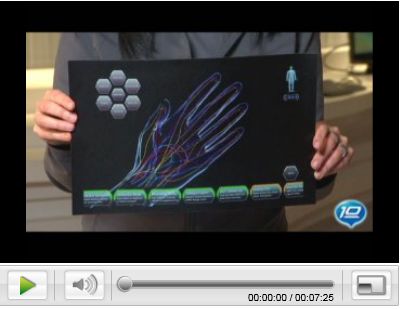

But I was always tempted to show it even to my federal government friends – and anyone else – just because it’s so impressive!

Continue reading

The Scientists Behind the Headline

Obama Promises Major Investment in Science” – AP News story (April 27, 2009)

“The bottom line is that if you’re a fan of new technologies being developed on US soil, you should be pretty damned excited.”Alex Koppelman, writing in Salon.com

President Obama announced today an effort to increase the nation’s investment in research and development spending for the sciences and new technologies.  As Alex Koppelman points out:

One particularly striking point to note about this: That level of funding [an increase to ‘more than three percent of GDP’] would almost meet the amount of money spent on defense. To some extent, that may simply represent a shift in where on the budget certain funds are accounted for, as defense spending has always been a key driver of American scientific research, but it’s still a sharp difference from the normal state of affairs.

I’ve written before (“How to Find Research“) about the need for increased R&D spending, and about the role of the White House Office of Science & Technology Policy in its main role: advising the President and others within the Executive Office of the President on the impacts of science and technology on domestic and international affairs.

OSTP does the hard work – but it is guided in part by the President’s Council of Advisors on Science and Technology, or PCAST.  This group can be a quiet backwater – as it has been on and off for years – or it has the potential to be a dynamic leading voice in advising the Administration on S&T policies, particularly in investments in scientific research and tech innovation.

It looks like we’re on the dynamic upswing, given that President Obama also used today’s high-profile announcement to name his appointments to an all-new PCAST. 

Continue reading

Place your bets on research

No reason to sugarcoat the Microsoft quarterly financial report issued this afternoon: it reflected the bad news in the overall economy.  Revenue down, earnings down, profits down. 

What I did find most interesting was the silver lining as Business Week points out in its coverage. Like most of Wall Street apparently (MSFT stock rose in after-hours trading), Business Week was impressed with some of the positive steps taken by the company:

Maybe the most striking news is Microsoft’s crisp cost-cutting. Who knew this Midas of the computer industry knew how to scale back so well? In the quarter, administrative costs fell by more than $1 billion, from $2.3 billion to $913 million. And the company completed its first ever general layoff, of 5,000 people. The company did not cut into its R&D budget, however. Spending there rose from $2 billion to $2.2 billion.”

It’s that last point that I’m focusing on, as it demonstrates that the company is living up to CEO Ballmer’s pledge to increase our annual R&D spending – amid this deep recession – from $8 billion a year to over $9 billion.

At a time when most budgets are hurting, that’s quite an investment.  If you’d like to know what we’re getting for that, check out http://research.microsoft.com, or for the most up-to-date reports, use Twitter to follow @MSFTResearch – this week, the Twitter feed has focused on papers and demonstrations we’re presenting at the 18th International World Wide Web Conference (WWW2009).

Email this post to a friend

AddThis Social Bookmark Button

Three cool new projects in Microsoft Research

[April Fool’s Edition]   I haven’t blogged in a little while – been a little busy – so I’ll make up for it with a burst of three cool new things coming out of the inventive lab work at Microsoft Research – improving Twitter, computer performance, and mobile phones.

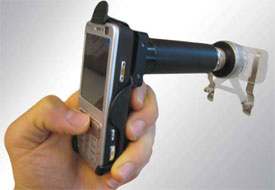
MegaNano: New High-End Camera for Cellphones

Many people are dissatisfied with the fuzzy quality of photos taken with their built-in cellphone cameras. So Microsoft will be rolling out this summer the most advanced built-in mobile phone-cam on the market, based on a fantastic prototype now in final user testing at Microsoft Research’s Beijing lab.

MegaNanoDubbed the “MegaNano,” the sylish but diminutive camera boasts 72 megapixel resolution and a shutter-speed setting range from 0.003 seconds all the way up to seven hours.

The itty-bitty MegaNano will be launched simultaneously with the new Microsoft Mobile Apps Store, bundled with a nice selection of jackets and outerware with specially reinforced pouch-pockets and backpacks designed to hold the tiny device. 

I know you’ll want one. One beta-tester says, “It’s so small yet so powerful!  I have to remind myself sometimes that the weight on my shoulders is actually a tiny camera!”

Continue reading

A Semantic-Touch-Flexible-Cloud Future Prototype

One of the more popular posts I wrote in 2008 about Microsoft Research prototypes featured the “Research Desktop” project, bringing together semantic analysis with Web 2.0-style user interfaces. MSR is now supplementing those concepts with more natural interfaces and new display and touch technologies.

ces-future-prototypes

Tonight at the Las Vegas 2009 Consumer Electronics Show, Janet Galore of Microsoft’s Strategic Prototyping unit was onstage with Steve Ballmer, showing a conceptual demo of several technologies of the future which could significantly change the way people find, share and use information. Take a look at the video, which shows among other things new touch capabilities, semantic analysis, “Software + Services” integration of device computation with cloud computing, and flexible active displays.

By the way, that last one – flexible displays – was just highlighted by Bob Gourley in his New Year’s “Look Ahead: Some Technology Developments to Expect in 2009.”  I think this video’s example, about six and a half minutes ino the scene, really makes clear the startling promise of new displays.

Email this post to a friend

AddThis Social Bookmark Button

Stretching collaboration with Embodied Social Proxies

My wife and I are spending Christmas this year at home in Montross, and I’m sad that we’re not visiting with family in North Carolina or California.  But I’ve been looking at some new Microsoft research efforts on how to keep in touch with people in more natural ways, particularly valuable for teams working across geographic distances, which is how our Microsoft Institute works.

The question of how distributed teams can work collaboratively is only going to get more challenging, with out-sourcing and crowd-sourcing. Last week the Institute had a great visitor to our Reston digs: Tony Hey, Microsoft’s Corporate Vice President of External Research.  Tony’s bio on Wikipedia mentions his thirty years as a leading European academic (particle physics was his game), along with the excellent books he’s authored: Einstein’s Mirror, and Feynman and Computation.

Continue reading

Several new Microsoft advanced technologies

Fact: As reported in TechCrunch and other sites today, “Microsoft’s Live Labs has just released Thumbtack, a web clipping service that allows users to compile links, media, and text snippets into online storage bins for future reference. Users can also share their Thumbtack collections with their peers, allowing them to collaborate by adding new clips and notations… The service works fine on IE7 and Firefox, and isn’t OS dependent. Each of these clippings can be sorted into folders called ‘Collections’, which can be published to the web via RSS, embedded in blogs, opened to friends for collaboration, or kept private for safe keeping.”  [There’s also a good Ars Technica review of Thumbtack here.]

Continue reading

MS Office Wired, OpenOffice Tired, Google Docs Expired?

google-newsFact: “Google Docs Struggles to Gain Foothold.” “Google Docs Use: Just a Blip.” “Study: Office Fights Off Google Docs Threat.” “OpenOffice Five Times More Popular than Google Docs.”  These are news articles covering the release of a new ClickStream study of typical use of “productivity software” like the Microsoft Office suite (Word, Excel), Google Docs, Google Spreadsheets, OpenOffice, etc. The study “among adult U.S. internet users showed that use of free productivity applications such as Google Docs and OpenOffice remains low, while Microsoft Office is in use by over 50% of adult U.S. internet users and shows no signs of declining popularity.”

Analysis: Well, yesterday I gave Google some nice words because of our joint work with DoD on improving military health IT. So I’m itching to tweak the Big G now, and we have some numbers to examine.  And I wasn’t cherry-picking the titles above either, they were the “most relevant” results on a Google News query this morning for <“Google Docs” OpenOffice Microsoft>.

Continue reading

Bill Gates will pay you to save the world

Fact: You have ten days to apply for a $100,000 grant from the Gates Foundation, for your innovative idea in global health research.  It’s a surprisingly simple application process, but you’d better get cracking!

Analysis: Last night the Bill and Melinda Gates Foundation announced the 104 individual winners of their Round 1 funding in the Grand Challenges in Global Health initiative, which “funds research on scientific problems that, if solved, could lead to advances against multiple diseases.”

Continue reading

Inventing the Software that Invents the Future

Worried about today’s stock market activity? Retreat with me into the security of the bright future that awaits.

Microsoft’s Craig Mundie (pater familias of the Institute for Advanced Technology in Governments), is on a college tour across the nation.  The trip is something of a reprise of jaunts Bill Gates famously made over the years, when he would string together visits to campuses partly to evangelize, partly to recruit, and mostly to get new ideas from bright young (and contrarian) minds.  The Seattle paper today labels these tours as filling the role of Microsoft’s “chief inspiration officer” (“Mundie gives campuses peek at tech’s future”).

Continue reading