Lucky 7, as in Windows 7

When there’s neat stuff nearing release, it’s both professionally fulfilling but also no fun being a Microsoft employee, because you’re (rightly) constrained from blogging about some of the cool technology being cooked up in MSR or in advanced development labs among the product groups.

It means that I wind up passing along links to open stories in the media written by outsiders who wind up getting an early story (mostly) right, through good solid reporting and insightful addition skills, i.e. 2+2=4.

I faced that several months ago when Live Mesh was in the batter’s circle, before its public announcement; I wrote what I could because I was so impressed with the technology and approach, as were the reviews after its unveiling.  Before, I wrote this post among others; and after the announcement I wrote this one

Same scenario now, with “Windows 7.”  You don’t have long to wait (October 27) for the public announcement, but if you’re curious about some of the technical approaches, there are several generally reliable bloggers already writing about “technical details” of the multi-touch, parallel-processing, and cloud-services S+S integration points in the new release. A couple of good quick examples are Mary Jo Foley, “Windows 7 to Get Parallel Processing Tweaks” (she’s not as snarky as usual) and TechRadar’s “Seven Things You Need to Know about Windows 7“).

Email this post to a friend

AddThis Social Bookmark Button

Crisis? Pshaw. Be Bold with Research Investments

Bottom line: The smart companies will weather this fiscal crisis by “steering into the skid,” and actually increasing their investment in the future.

One of my last pieces of advice to DIA’s director before leaving last year was to increase the amount of money annually invested in IT research and innovation. DIA’s technology budget was typically too bloated on the side of operations and maintenance for current systems, and not investing enough in the future, though during my time there we had made significant progress in redressing that, increasing the resources (people and money) put against “what comes next.”

In government-agencies particularly (and many torpid commercial enterprises also), budgeteers make the mistake of throwing money at legacy systems instead of being bold and prioritizing research for the next generation of systems. (Last year I wrote about these issues in “Moving Money to the Left.”)

Now, no one has asked me about my views on the fiscal “bailout package,” which makes sense, particularly when there are people who make far more sense than me expressing their well-founded opinions in ways I thoroughly agree with – such as, say, Harvard economist Jeffrey Miron in his excellent op-ed piece for CNN last night (“Bankruptcy not Bailout is the Answer“).

But a number of people have asked me what the impact on Microsoft might be from the current “crisis” and market volatility.  I have to say that I’m pretty optimistic, precisely because Microsoft is investing in the future, in ways that are designed to carry us through short-term downtimes and on to exciting new platforms.  The company’s cash-rich, which helps. 

 Most importantly, our CEO Steve Ballmer firmly pointed to our increasing bet on our new approaches to the future.  Speaking in Silicon Valley, he said proudly that not only will Microsoft continue to buy about 20 innovative companies a year, but we will also keep spending $9 billion a year, or 14 percent of revenues, on internal research and development. (See the Venture Beat story here.) 


Microsoft “will use the slump as a chance to invest more in our future than the other guys we’re competing with” – Steve Ballmer, quoted in Bloomberg.com  


There are going to be winners and losers coming out of this slump, as there have been in each of the tech slumps I’ve seen in my short (!) life over the past three decades I’ve been involved.  The winners are inevitably those with a vision for the long term and the determination to plan beyond the horizon. 

Microsoft won’t be the only winner (see “Microsoft, Xerox Invest in Innovation” for a description of the Xerox CTO’s similar thoughts), but I’m convinced we will be in the front rank.


Email this post to a friend

AddThis Social Bookmark Button

My latest Twitter fishwrap…

Last 24 hours of my Twitter posts syndicated to ShepherdsPi by LoudTwitter

              ————————————————-

17:42 Uh oh – my latest blogpost just got linked again on MSR homepage… last time that happened global hits were huge tinyurl.com/j4wcv #

17:47 Kicking people out of my office so I can go home myself, debate pizza party! #

22:52 The scrolling WisdomOfCrowd at election.twitter.com was the way to go tonight, funny/piquant/profane/profound … very American #

08:40 taking Photosynth pictures at home, later at Stratford Hall, will eventually post at tinyurl.com/6ebzu7 #

09:01 Still haven’t made it over to Library of Congress to play with their use of Surface. TJ “edited” by Adams? Absurd! tinyurl.com/4gmxdz #

               —————————————————-

If you’re bored, you can follow me in real time at http://twitter.com/lewisshepherd.

A New Prototype: Research Desktop

Fact: The international conference on Advances in Social Network Analysis and Mining (ASONAM 2009, next July in Athens, Greece) today issued its call for papers on “experimental and theoretical works on social network analysis and mining,” particularly relating to online social Web sites, email logs, phone logs and instant messaging systems “which are widely analyzed using graph theory and machine learning techniques.”  Interested authors are encouraged to submit abstracts of up to 300 words by December 10, 2008; the full papers aren’t due until January 31, 2009.  More info at www.asonam.org.

Analysis: Several Microsoft Research people are preparing papers based on their current research, and I’m considering attending myself (I’ve written before about MSR’s work in analyzing large social networks). There are three Microsoft scientists on the Committee (Dou Shen, Haizheng Zhang, and Rina Panigrahy – check out Rina’s publications on hashing and sketching algorithms).  It should be a top-notch conference, co-hosted by ACM and IEEE.

But that’s way off in the future – what if you want to look at some research stuff right now? Well, I’ve been going through the related “Socio-Digital Systems” work of MSR Cambridge (UK), and they’ve just added more information to their section here of the main MSR site.  That’s some neat stuff, more on the side of the actual social uses of digital data and the effects on our (still-human?) everyday lives.

Continue reading

Google, Microsoft, and Medical Research

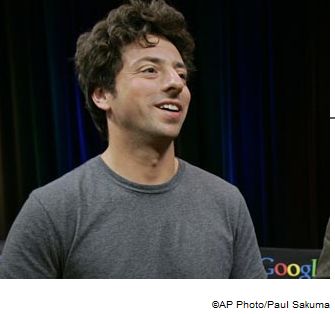
Fact: Two stark numbers are published today about Google co-founder Sergey Brin. First, the annual update of the “Forbes 400” wealthiest billionaires reports that Brin’s personal net worth is $15.9 billion (though that’s down some $2.7 billion from last year, due to the decline of Google’s stock price by 40% since last November).  More importantly, Brin himself wrote in his personal blog today that by having genetic research done on himself, “I learned something very important to me — I carry the G2019S mutation… it is clear that I have a markedly higher chance of developing Parkinson’s in my lifetime than the average person. In fact, it is somewhere between 20% to 80% depending on the study and how you measure.”

Analysis: Sergey Brin’s own blog account of his discovery is a remarkably personal and touching piece, dealing with his mother and her own belated diagnosis of Parkinson’s, and the scientific boundaries of current genetic research and the implications one can draw from this immature field of science.

(c) AP Photo, Paul Sakuma

This was only the second post on Sergey’s new blog; the blog’s name is “Too” – and the first post merely stated the rationale for that name (“Welcome to my personal blog. While Google is a play on googol, too is a play on the much smaller number – two. It also means ‘in addition,’ as this blog reflects my life outside of work”). 

If his refreshing honesty and thoughtfulness today are going to be the calibre of his writing, I’m going to be a regular reader. 

His piece reminds me of Steve Jobs’ modern classic, his 2005 Stanford Commencement Address.  If you’ve never read that, then stop reading my words right now, and go read that. You’ll find yourself over the weekend thinking about your own approach to life.

But back to Brin and genetic research.  It will be interesting to watch what Google’s research arm is able to do in the area of medical and health research.  To make progress in bioengineering and genetics, “organizing the world’s information” is absolutely paramount and of course that’s Google’s mission statement.

Continue reading

Gartner sees Hype Cycle for Social Software

Fact: Gartner now says that “Web 2.0 software” is falling from its “Peak of Inflated Expectations” and is on its way to a “Trough of Disillusionment.”  However, Gartner finds that wiki software has traversed that path already and is now well on its way up again to mature enterprise acceptance as a valuable productivity tool.

Analysis: Gartner’s just released their 2008 “Hype Cycle” report on Social Software – you know, stuff like public virtual worlds and Web 2.0 tools.

(I don’t know the legality of republishing the actual chart itself, so I’m not including it; I use the Microsoft enteprise license to access Gartner research.  I do note that a Web 2.0 enthusiast from the Netherlands has already posted the new Hype Cycle chart another new and related Hype Cycle chart, on “emerging technologies,” as a Flickr image here. There’s great overlap between the two reports.)

I’ve written before about the usefulness of Gartner analyses; I have to admit that Hype Cycles are my favorites. There’s something about internally debating their judgment calls as your eye travels the path, from pre-adoption “Technology Triggers,” through the bubble-esque “Peak of Inflated Expectations,” and right down into the depths of the “Trough of Disillusionment.” 

If you’re an enterprise IT guy, in a CIO or CTO role or investigating/recommending/approving new technology investments, you really wind up focusing most time on the slow ascending climb to the right of the chart, what Gartner calls the “Slope of Enlightenment.”  Just as in the old days when corporate “data-processing” chiefs lived by the mantra “No one ever got fired for buying IBM,” today’s CIO’s rely on technology that has essentially graduated to Gartner’s “Plateau of Productivity.”

Several other initial observations on the chart:the two Hype Cycle charts:

  • Newest disruptive technology trigger charted: “Erasable Paper Printing Systems,” something being researched by numerous large companies like HP and Microsoft as well as already in startup mode, but pegged by Gartner as still 10 years or more from mainstream adoption
  • Microsoft’s Surface has achieved brand dominance, as Gartner puts “Surface Computers” on the rise in visibility
  • Other key investments of Microsoft Research are validated with positive momentum ascribed to “Mobile Robots,” “Augmented Reality,” and “Green IT,” though only the last one is within 5 years of mature adoption
  • “Cloud Computing” is still on the rise, not having peaked in hype yet, though many would find that hard to believe – with its Time Magazine cover last year, it’s practically reached the point of being satired on The Daily Show
  • “Public Virtual Worlds” are right alongside “Web 2.0” in still heading down toward their disappointment trough
  • Furthest to the right – meaning most mature and enterprise-worthy – is the seemingly venerable “Basic Web Services.”

I really like these reports for a number of reasons – among other things, it looking at them together makes clear the social aspect of a number of more mature technologies (Tablet PC, Electronic Paper) which I favor, and which too often are recognized only for their technical aspects, not the socially enabling and disruptive benefits within and across organizations. 

The Gartner report also allows the blogosphere and twitterverse to step back from the moment-to-moment faddishness of the social software sector, and reflect upon the larger context of the individual technologies.  One measure of health: not a single technology earned the dubious distinction of “Obsolete Before Plateau,” a mark of shame which Gartner regularly applies to technologies that are getting hype but show no longterm promise.

Taken together, the social software space appears robust and very, very interesting.  Get a hold of the full report, it’s worth it.

Note: post updated 8/12/2008 to add references to a second Hype Cycle report on “Emerging Technologies”


Email this post to a friend

AddThis Social Bookmark Button

Washington Post Puts Microsoft on Page A1 – For Good Research!

Stop the presses! Microsoft Research is getting national front page coverage!

The work of Eric Horvitz and Jure Leskovec got top coverage in major newspapers and news sites today.  With that fame, Eric will probably never again be willing to just while away a Friday afternoon with our Microsoft Institute folks, brainstorming some outside-the-box ideas for future work, as he did this week with us in Redmond’s Building 99.

Right after that meeting, I bugged out of Redmond for a red-eye to the east coast.  Back home in DC this morning (Saturday), I opened my Washington Post to find on page A1, “Instant-Messagers Really Are About Six Degrees from Kevin Bacon: Big Microsoft Study Supports Small World Theory.

Continue reading

How to Keep Up with the Semantic Space

Fact: Reshma Sohoni, chief executive of Seedcamp (the VC accelerator focusing on European tech startups) said in an interview this week that “In the past few months, we’ve seen a lot more developments around the semantic web,” and talked about the coming value of semantic web services.  

Analysis:  There’s never-ending buzz about the semantic space. Just this week John Conroy writing at the Content Matters blog had a long and interesting piece examining “three ingredients needed to enable and popularize the semantic Web,” with the aim of answering “if we really are on the cusp of a content revolution.”

Also, I admit it, I can’t stop playing with the semantic-space startups, whether it’s Sensebot or the newly launched Evri, or Powerset (just acquired by Microsoft, as I wrote about previously).

Continue reading

IPsec, IPv6, and Security at Your House

Just had a great meeting in Redmond introducing some government friends to Steve Riley, one of Microsoft’s “technical evangelists” on security – network, app, data security and most of all, IP security.  He’s great at the big-picture integrated view of security, including physical security right up through the IP stack – here’s a video of a recent talk he gave at Microsoft’s TechNet called “The Fortified Data Center in Your Future.”

Check out his blog and you’ll see the kind of topics he works on; just one example of obvious value is a recent post full of real-world down-to-earth security advice for securing your environment at home (home networking, email use, internet browsing, etc for family and friends).

Oh, he’s also been on Twitter for almost a month now, where he mixes interesting finds on security news with offbeat political commentary 🙂  Yet another example of some of the bright people I meet back at the mothership in Redmond….

Email this post to a friend

AddThis Social Bookmark Button

Higher Math on the Sands of Santa Barbara

UCSB

UCSB, looking NW

Spent Sunday afternoon with world-renowned mathematician Michael Freedman (short bio here) walking the beach and bluffs above, just northwest of UC Santa Barbara, talking about a number of absurd and not-so-absurd possibilities in the future applications of quantum computing.  Here’s an example of the kind of stuff I was trying, very hard and maybe somewhat successfully, to grasp while walking in the California sun and trying to ignore the nude sunbathers and hang-gliders.  If that’s unhelpful (as most of it is for me), here’s a straightforward description of some of his main work and its possible applications. 

Continue reading