
Pentagon’s New Program for Innovation, in Context

FACT: According to an article in today’s Washington Post, the Pentagon has announced “the selection of six university professors who will form the first class of the National Security Science and Engineering Faculty Fellows Program. The professors will receive grants of up to $600,000 per year for up to five years to engage in basic research — essentially a bet by the Pentagon that they will make a discovery that proves vital to maintaining the superiority of the U.S. military.”

ANALYSIS: This new program is an innovation from DoD’s Director of Defense Research and Engineering (DDR&E), and since tomorrow I’ll be at Ft. McNair for a two-day conference sponsored by DDR&E on Strategic Communications, I’ll congratulate John Young and his staff for the good idea.

But the Post article falls short in two ways: one immediate (it leaves out key information about next year’s program and the upcoming deadline!) and one longer-term (it ignores the overall context of federal support for R&D).  I’ll fill in the blanks below.

Continue reading

Some Photos from Cairo

I’m in Cairo this week, my first-ever trip to Egypt, visiting the Cairo Microsoft Innovation Center (CMIC) – they’re doing some really interesting work particularly in Information Retrieval, Collaborative Content Services, and Digital Content Services – a very web-minded, web-services driven set of research and development activities with some real payoff in areas like machine translation and collaborative practices.   More information on their work at http://www.microsoft.com/middleeast/egypt/cmic/.

I love Cairo already, on just my second day here.  I’ve posted some photos at a Flickr collection, and  I’ll keep adding to those….


Email this post to a friend

AddThis Social Bookmark Button

IARPA and the Virtual Long Tail

FACT: This week, the Intelligence Advanced Research Projects Activity, an arm of the Director of National Intelligence (DNI), launched its new unclassified website.  What’s there is initially fairly minimal, but they’ll be adding to the public information posted there regularly.

ANALYSIS:  I spent the week in Orlando, as a Keynote speaker at the IARPA “Incisive Analysis Conference.”  I’ll be writing a little more about the conference in the near future, as I saw some great demo’s and spoke to the principal investigators on many excellent and far-sighted advanced research projects sponsored by IARPA.  It was great to be there and to see so many old friends from the intelligence community, the national labs (PNNL, Sandia, Oak Ridge, Livermore), DoD, and innovative commercial R&D outfits.  Also, as the first IARPA conference since the organization’s launch, it was an opportunity to hear new director Lisa Porter communicate her vision and principles, which she did well and I’ll discuss those soon as well.  (She also kidded me about my efforts to make her a cultural phenomenon, but I blamed it on WIRED magazine.)

Continue reading

Google Accelerates Hiring of Nobel Laureates

FACT:  Answering a question in this week’s Business Week about several recent high-profile departures of Google executives and engineers, CEO Eric Schmidt said: “What bothers me is that some people write: ‘So-and-so left the company.’ Well, they don’t also write that we hired 120 people that week, five of whom have Nobel prizes, three of whom have PhDs, and so on, who are beginning their career here now.”

ANALYSIS: There have only been some 700 Nobel Laureates awarded in the history of the program since 1901, according to the official Nobel site, and at least as of a 2001survey there were approximately 210 living Nobel prize-winners.

So, with some trepidation, I calculate that by Schmidt’s aggressive hiring of five Nobel laureates in a typical week, the entire roster of living prize-winners will be working for Google within a year.

Continue reading

Microsoft Research Reclaims Value of Pi

pi-techFACT: Educators in the state of Alabama are chafing as the state celebrates a dubious anniversary: today marks ten years since the Alabama state legislature voted to change the value of the mathematical constant pi from 3.14159… to the “Biblical value” of 3.0.  Ramifications were felt across the state. 
Now, a team of Microsoft Research computer scientists have announced success in a groundbreaking effort to refactor the Biblical value, using modern high-performance computing hardware and machine-translation technologies on the original Old Testament texts.
  
ANALYSIS:  Looking back, an April 1998 issue of Science and Reason newsletter written by physicist Mark Boslough recounts the political and cultural battles which went behind the Alabama legislative change. The legislature of the “Yellowhammer State” justified the change by citing biblical injunction. As one supporter put it: “the Bible very clearly says in I Kings 7:23 that the altar font of Solomon’s Temple was ten cubits across and thirty cubits in diameter, and that it was round in compass.”

The use of “3.0” as the value of pi led to problems in schools, businesses, and local scientific pursuits, including a group of frustrated engineers at the NASA research facility in Huntsville.  According to NASA/Huntsville’s director of special projects “Dr.” Jim Simon (doctorate pending), “We had strayed from using our Microsoft software and instead had been trying to figure out how to use an advanced Google search platform, which was sold to us as a powerful Cloud Computing system.”

Unfortunately, that effort proved frustrating for the “rocket scientists” any time they used calculations involving pi, based on the Alabama-standard value of 3.0, mostly because they were under the mistaken impression that they were contractually barred from using Cloud Computing on any sunny days. Given the hospitable local weather that left them unable to use their computers for an average of 290 days each year.

Continue reading

Media Says, IBM is Good for Government. Ah, Strike That….

FACT:  Federal Times, which was first to break the story, is reporting this afternoon that “IBM has been indefinitely suspended from doing business with federal agencies, according to a General Services Administration Web site.”

ANALYSIS: People accuse me of being too cynical.

I admit, I am something of the opposite of the great line from This is Spinal Tap, when the David St. Hubbins character says, in the random interview clips at the end of the movie, “I believe virtually everything I read, … and I think that is what makes me more of a selective human, than someone who doesn’t believe anything.”

I do have trouble believing things I hear and read from most mainstream sources at first blush. 

Continue reading

The Future of Enterprise Computing – and Social Computing

I wrote the other day about how highly ranked the University of Virginia’s undergrad business school is (a close second in BusinessWeek’s annual ranking), and mentioned that one reason is the creative research and programs they sponsor.

In fact, thanks to UVA’s McIntire School of Commerce, I enjoyed a great day recently exploring some of my favorite topics with leading experts.  I was an invited speaker at their one-day conference on The Future of Enterprise Computing on March 14th, presented by McIntire’s Center for the Management of Information Technology (CMIT).  It was a fascinating day….

Continue reading

The IC’s Own Geek Superheroine

FACT: According to the law establishing the new position, the Director of National Intelligence is charged with “the recruitment and training of women, minorities, and individuals with diverse ethnic, cultural, and linguistic backgrounds,” as a way of broadening the personnel base on which the nation relies for intelligence analysis.

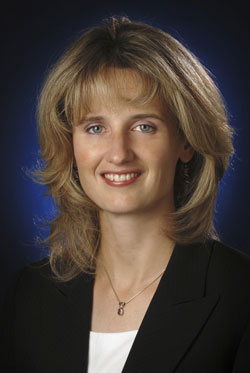
ANALYSIS: I’ve noticed that one of the single-most-viewed posts in this six-month-old blog has been my early profile of Dr. Lisa Porter, when she was appointed the first director of IARPA, the advanced-tech crowd for the intelligence community.

I can tell that the large volume of hits isn’t from my normal reader crowd, but comes in from search results. There was another uptick of hits on that old post this week, driven by searchers using Google and Live Search, and I believe it’s because WIRED magazine has its own profile of Porter in its new edition, the one with “Apple: Evil/Genius” on the cover.

The new profile, while short, doesn’t mind taking advantage of her apparently unexpected good looks; it begins, “Picture Q as a tall blonde woman with an American accent, and you’ve got Porter. Lisa Porter.”

Continue reading

Puncturing Circles of Bureaucracy

In my airplane reading this week was the February issue of Defense Systems magazine, with an interesting article on the Department of Defense’s “Rapid Reaction Technology Office,”  or RRTO.

(Also in my reading stack was a hilariously disturbing article in WIRED about the merry pranksters of Second Life, but it has nothing to do with my topic right now.)

RRTO is facing great challenges inherent in trying to innovate DoD practices, and I’d argue some of the problem is evident right there in its title: there’s rarely anything truly “rapid” about a reactive approach to technology innovation.

After I joined DIA in 2003, leading that agency’s efforts at “innovation” in information technologies, I began to structure my thoughts about the impediments to change and improvement.

Continue reading

Massive Data Centers, Right in your Cellphone

I try to keep my cellphone on “vibrate” during meetings; no one needs to know my taste in ringtones. But more importantly, I keep it on so that I can use the browser and web search ability, which I wind up doing almost as often as I check my email.

Yesterday was a good example of the utility of ever-handy web search. My group and I had brought together an international group of government officials to visit Microsoft Research’s annual TechFest.  Tuesday was the “Public Day” with the media and outsiders allowed, so we spent that day at the Microsoft Convention Center with Craig Mundie, Rick Rashid, and a hundred others, but Wednesday morning we offered a series of side briefings for the group at Microsoft’s Executive Briefing Center, on topics of interest to large government and defense agencies.  Topic one was data centers.

Continue reading