
The IC’s Own Geek Superheroine

FACT: According to the law establishing the new position, the Director of National Intelligence is charged with “the recruitment and training of women, minorities, and individuals with diverse ethnic, cultural, and linguistic backgrounds,” as a way of broadening the personnel base on which the nation relies for intelligence analysis.
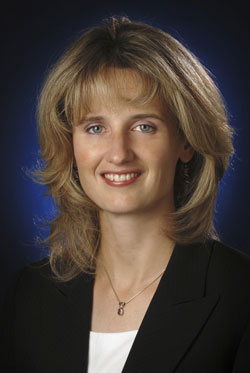
ANALYSIS: I’ve noticed that one of the single-most-viewed posts in this six-month-old blog has been my early profile of Dr. Lisa Porter, when she was appointed the first director of IARPA, the advanced-tech crowd for the intelligence community.

I can tell that the large volume of hits isn’t from my normal reader crowd, but comes in from search results. There was another uptick of hits on that old post this week, driven by searchers using Google and Live Search, and I believe it’s because WIRED magazine has its own profile of Porter in its new edition, the one with “Apple: Evil/Genius” on the cover.

The new profile, while short, doesn’t mind taking advantage of her apparently unexpected good looks; it begins, “Picture Q as a tall blonde woman with an American accent, and you’ve got Porter. Lisa Porter.”

Continue reading

Social (Network) Science

Fact: The social-networking site LinkedIn claims as users “17,000,000+ Professionals, 500,000+ Senior Executives, Executives from 498 Fortune 500 companies, [and] 65,000 new Professionals every week.”

Analysis: Since I hold the title of “chief technology officer” for my group at Microsoft, I regularly check the widely-read blog CTOvision, written by Bob Gourley, CTO of Crucial Point.

CollaborationlogosYesterday he posted a very solid summary of several social networking tools, including my preferred LinkedIn.  If you’re not up to speed on the genre it is a helpful cheatsheet and “buyer’s guide.”

The technology area deserves the attention. There are a dozen or more such sites for each that Gourley covers, and he chooses the ones that have shown growth and potential longevity; why invest any time adding personal data to a site just to watch it disappear? We’ve all had that happen. And yet hockey-stick growth has to be managed – LinkedIn for example has come in for some critical attention for some snafus along the way.

Let’s look at some efforts to understand more about the science behind the software….

Continue reading

Punk Rock & Moore’s Law

Fact: Intel’s CEO says “We have new processors that have 250 million more transistors, and yet are 25 percent smaller than today’s version and don’t require more electricity to run.” (Interview published 2/1/2008 )

Analysis: Moore’s Law: immortal, or destined to be broken?  Punk Rock: dead, or in revival?  And why were Johnny Rotten and one of the legendary Traitorous Eight in the Fairmont Hotel in San Jose on the same night back in 1989?

Once-and-future Sex Pistol John Lydon (Rotten) was there after playing a gig up the road, and I happened upon him in the bar, where he proceeded to buy round after round of Heinekens for me, him, and his roadies. He latched onto me because he wanted to talk about American politics, and to his delight I reminded him of some caustic things (surprise) he had had to say over the years about politicians like Reagan and Carter. That just got him started, and we wound up laughing pretty drunkenly into the night in the Fairmont’s swanky lobby bar.

But earlier that evening, I had shown up at the hotel with friends to attend the Silicon Valley Business Hall of Fame dinner, where Bob Noyce, co-founder of Intel, was being honored along with others….

Continue reading

Wall Street Journal – Peering into the Future, Dimly

The Wall Street Journal ran a collection of think-pieces today on “Thinking About Tomorrow: How will technology change the way we shop, learn and entertain ourselves? How will it change the way we get news, protect our privacy, connect with friends? We look ahead 10 years, and imagine a whole different world.”

My take on the story, though, was “ho-hum.” Looking ahead 10 years should get the mind a little further than easily predictable stuff such as this: “Mobile devices will get smaller and more powerful, and will connect to the Internet through high-speed links. The result: People will be able to do anything on a hand-held that they can now do on a desktop computer. In fact, they’ll be able to do even more, as mobile gadgets increasingly come equipped with global-positioning-system gear that can track your every move. As you drive around, for instance, you might get reviews of nearby restaurants automatically delivered to a screen in your car — maybe even projected onto the windshield.”

Aside from the safety aspect of that type of projection, this scenario surely is only a year or so away – not 10.

Continue reading